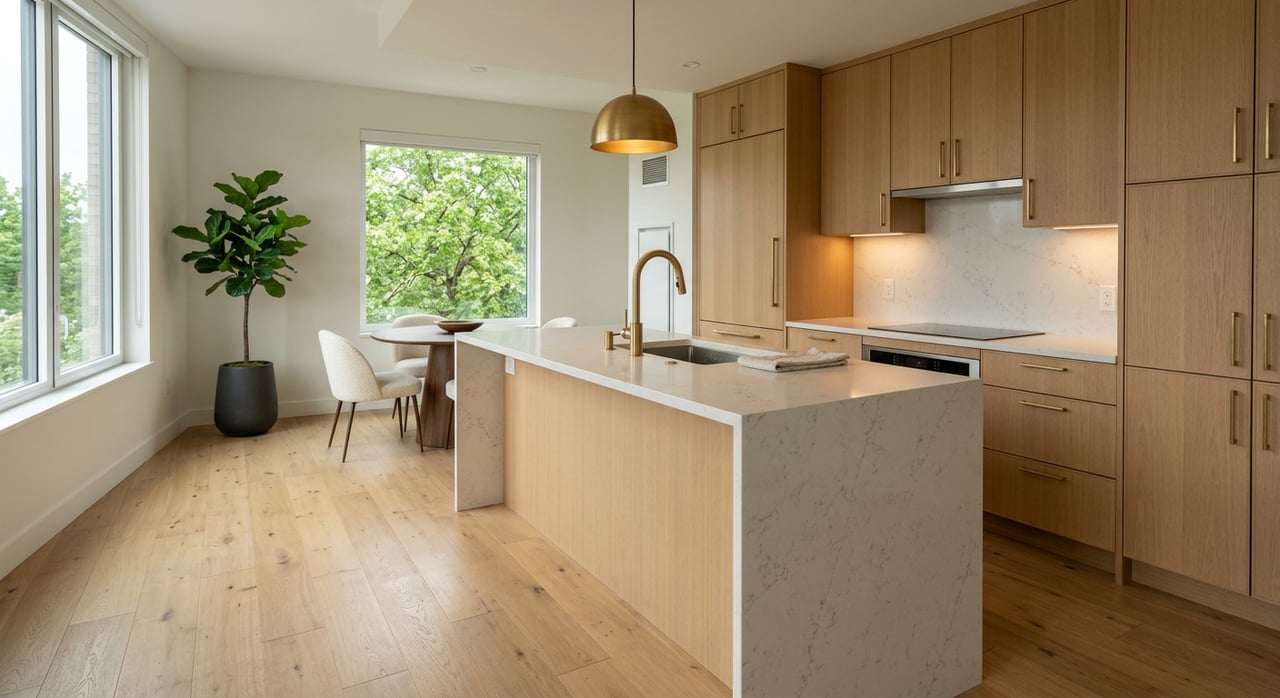
If you are shopping for a new construction condo in West End, it helps to know that “new” does not always mean a brand-new high-rise tower. In this part of Washington, DC, many of the most interesting opportunities come through boutique redevelopments, adaptive-reuse projects, and mixed-use buildings with a smaller number of residences. That can create exciting options, but it also means you need to look closely at pricing, monthly costs, delivery details, and the developer behind the project. Let’s dive in.
West End new construction looks different
West End is one of DC’s most central and high-value condo markets, with strong interest tied to its location near Georgetown, Dupont Circle, Downtown, and Foggy Bottom. Recent District development materials show that new housing here often comes as mixed-use or adaptive-reuse projects rather than large condo-only towers.
That matters because your choices may be more limited, more design-driven, and more individualized than in neighborhoods with bigger pipeline inventory. In West End, you are often comparing a small collection of residences with distinct finishes, service levels, and fee structures instead of dozens of similar units in one building.
For example, West End Square 37 includes 71 condominiums and 93 apartments, while West End Square 50 includes just 6 market-rate residences alongside public facilities. That pattern helps explain why new condo supply in West End can feel selective and premium.
Pricing starts high and rises fast
West End is already an expensive condo market before you even narrow the search to newer product. In March 2026, the median West End condo sale price was $1.1 million, up 26.7% year over year, with 58 condos for sale and a median list price of $940,000.
For you as a buyer, that means new construction pricing should be measured against a neighborhood that already trades well above many other DC condo areas. A newer building may command a premium, but that premium can vary sharply depending on the scale of the project, amenity package, and whether the building is a conversion or a more fully reimagined luxury residence.
Not all West End new condos are priced alike
One of the biggest mistakes buyers make is assuming the neighborhood median tells the whole story. In West End, newer condo pricing has a wide range, and the gap between boutique and trophy product is meaningful.
At one end, 2525 Penn offers a useful benchmark for smaller boutique inventory. This 15-unit condominium redevelopment was completed in late 2024 and includes restored historic details, curated interiors, 9-foot ceilings, Bosch appliances, quartz counters, white oak flooring, a rooftop terrace, solar-powered common areas, package storage, bike storage, dog washing, and garage parking. A current listing there is priced at $775,000, or about $872 per square foot.
At the other end, Westlight shows where top-tier pricing can go. One current listing at 1111 24th St NW #53 is priced at $3.867 million for 3,031 square feet, or $1,533 per square foot, with $2,911 per month in HOA dues. That is a very different value proposition from a smaller boutique building, even within the same neighborhood.
The key takeaway is simple: West End’s new condo market is not one market. It is a collection of smaller submarkets shaped by building story, design, service, and scarcity.
Projects buyers should know
2525 Penn
2525 Penn stands out as a boutique redevelopment with a lower entry point than the neighborhood’s ultra-luxury tier. If you want newer finishes and a smaller-building feel, this type of project may be attractive.
It also highlights a common West End theme: carefully restored or reworked buildings with modern interiors and selected amenities rather than oversized common spaces. That can translate into a more tailored ownership experience and, in some cases, lower condo fees than buildings with a heavier amenity load.
2626 Pennsylvania Ave NW
2626 Pennsylvania Ave NW is being marketed as a 32-unit luxury condo redevelopment through adaptive reuse and expansion of an older office building. Public materials cite sustainability, smart growth, urban infill, renovation, and reuse, with an anticipated 2025 delivery.
For buyers, this project is a good example of how supply tends to arrive in West End. Instead of broad, standardized inventory, you are often looking at smaller-scale redevelopment where the specifics of execution matter a great deal.
Westlight
Westlight remains one of the best-known luxury condo buildings in West End. The mixed-use project includes 71 condominiums in a 10-story building and illustrates the top end of pricing in the neighborhood.
If you are considering a building like this, look beyond the headline finishes. You should also weigh the monthly dues, service level, and whether the scale of the amenities matches how you actually plan to live.
2501 M
2501 M is another strong comparison point because it shows how newer-feeling West End buildings compete on service and finishes as much as on size. Current listing details describe a full-service building with 24-hour front desk service, roof terrace, fitness center, yoga studio, clubroom, conference room, on-site management, floor-to-ceiling windows, white oak flooring, and panelized Bosch and Thermador appliances.
If you value convenience and polished day-to-day living, a building like this may appeal to you even if the floor plan is not the largest option on the market.
Compare new construction with resale carefully
In West End, resale can be a serious competitor to new construction. Some older luxury buildings offer larger layouts, established service, and strong amenity packages at a lower price per square foot than a flashy new listing.
A good example is 2501 Pennsylvania Ave NW Unit 2A, listed at $2.395 million for 2,732 square feet, or about $877 per square foot. The building dates to 2009 and includes 24/7 concierge service, two underground parking spaces, and a large storage room.
That does not automatically make resale the better choice. It does mean you should compare what you are getting in practical terms, not just whether a home is labeled “new.”
Columbia Residences offers another useful benchmark. Delivered in 2006 as a combination of historic adaptive reuse and new construction, it includes 225 luxury condominiums and amenities such as a swimming pool and fitness center. For many buyers, buildings like this can offer a strong middle path between brand-new boutique inventory and older traditional condo stock.
Monthly cost matters as much as price
In a neighborhood like West End, list price alone can be misleading. Your all-in monthly cost may shift the value equation more than the purchase price does.
A building with extensive services and amenities may carry substantial HOA dues. Westlight unit 53, for example, carries $2,911 per month in HOA dues, while 2501 Pennsylvania Ave Unit 2A carries $3,557 per month.
By contrast, 2525 Penn is marketed with low condo fees and a lighter amenity load. If you are choosing between a lower-fee boutique building and a full-service luxury property, the right answer depends on how long you plan to stay, how you use the building, and how comfortable you are with the total monthly carrying cost.
Ask whether it is truly new or a conversion
This is one of the most important questions in West End. Because many local projects involve adaptive reuse or condominium conversion, you should understand exactly what “new construction” means in each building.
In the District, newly created or converted condominiums must be registered with DHCD before the first residential unit is conveyed. The developer must also post warranty security equal to 10% of construction or conversion costs. Newly converted units may also owe a 5% conversion fee at settlement unless exempted.
These rules are especially relevant in West End, where redevelopment is common. If a project is a conversion, you should ask clear questions about what parts of the building are new, what systems were replaced, and what that means for your ownership experience.
Understand the warranty timeline
You should also know the District’s structural-defect warranty framework before signing a contract. In DC, the structural-defect warranty period runs two years for individual units from the date the developer conveys title.
For common elements, the two-year period runs from the later of the first unit conveyance or completion of the common elements. District guidance also notes that structural defect claims are handled through DHCD.
That does not replace a close contract review, but it gives you a useful baseline. In practical terms, you want to know how the developer handles punch-list items, post-closing repairs, and warranty communication.
Key due diligence questions to ask
A West End new condo purchase often comes down to the details. Before you move forward, make sure you get answers to questions like these:
- Is the residence a true ground-up new build or a condo conversion?
- What finishes are standard, and what counts as an upgrade?
- Are parking and storage included in the price?
- What is the expected delivery timeline?
- How will punch-list work be handled after closing?
- What is covered under the developer’s warranty process?
- What are the projected condo fees, and what do they include?
These questions matter in any market, but they are especially important in West End because projects are often smaller, more customized, and less interchangeable.
Developer track record deserves close attention
In West End, the sponsor behind the building can matter just as much as the floor plan. Many projects are effectively one-off offerings with distinct management, design, and construction decisions.
That is why execution history matters. Public materials show that EastBanc has more than 40 years in urban revitalization and more than $4 billion in assets under management, with a track record in luxury residential and mixed-use projects. PT Blooms states that its founder has delivered 222 units and more than $170 million in residential projects, while New Legacy Partners emphasizes urban infill, renovation, and adaptive reuse.
For you, that means the developer’s experience is not just background information. It is part of the risk and value analysis.
What smart buyers focus on in West End
The strongest buyers in this market stay disciplined. They do not assume the newest listing is automatically the best value, and they do not rely on neighborhood median pricing as a shortcut.
Instead, they compare each option across a few core categories:
- Price per square foot
- Monthly carrying costs
- Included parking and storage
- Amenity and service level
- Building type, including conversion versus new build
- Delivery timing
- Sponsor reputation
- Resale competition nearby
That approach is especially helpful in West End, where the inventory mix is nuanced and often highly building-specific.
The bottom line on West End new condos
If you are considering new construction condos in West End, expect a market defined by scarcity, design-forward redevelopment, and premium pricing. You are often choosing among boutique residences, adaptive-reuse projects, and amenity-rich buildings rather than large blocks of standard inventory.
That can be a real advantage if you want something distinctive in a central DC location. It also means your best decision will come from careful comparison, detailed due diligence, and a clear understanding of the total cost of ownership.
When you want a building-by-building strategy for West End, Kerry Fortune Real Estate brings a principal-led, neighborhood-focused approach to help you evaluate new construction, luxury resale, and the tradeoffs that matter most to your goals.
FAQs
What counts as new construction in West End condos?
- In West End, “new construction” may include ground-up buildings, adaptive-reuse redevelopments, or condo conversions, so you should confirm exactly what parts of the property are newly built or newly renovated.
How expensive are new construction condos in West End?
- Pricing varies widely. Boutique newer product can start in the mid-$700,000s, while top-tier luxury residences can reach several million dollars and far exceed the neighborhood median.
Why are West End condo fees so different from building to building?
- Condo fees often reflect service level, staffing, amenities, and building scale. A full-service luxury building may have much higher monthly dues than a boutique property with fewer shared amenities.
Should you compare new West End condos with resale units?
- Yes. In West End, older luxury resale units may offer more square footage, parking, storage, or established amenities at a lower price per square foot than some newer listings.
What DC rules matter for West End condo conversions?
- Newly created or converted condominiums in DC must be registered with DHCD before the first residential unit is conveyed, and developers must post warranty security equal to 10% of construction or conversion costs.
How long is the structural-defect warranty for DC condos?
- In DC, the structural-defect warranty period is two years for individual units from title conveyance, and two years for common elements from the later of first conveyance or completion of the common elements.
What should you ask before buying a new condo in West End?
- You should ask whether the building is a conversion or true new build, what finishes are standard, whether parking and storage are included, what the condo fees cover, when delivery is expected, and how warranty and punch-list issues will be handled.
