If you picture Georgetown as all cobblestones and quiet rowhouses, the waterfront adds a very different layer to the story. Living near the Georgetown Waterfront means you are close to one of DC’s most scenic public spaces, but you are also in one of the neighborhood’s most active, public-facing pockets. If you are wondering whether that mix of beauty, convenience, and energy fits your lifestyle, this guide will help you understand what day-to-day living really feels like. Let’s dive in.
Waterfront Living Feels Active
The Georgetown waterfront sits just south of M Street, and that location shapes daily life in a big way. You are close enough to walk to one of Georgetown’s main shopping and dining corridors in under five minutes, while still having the Potomac River and waterfront park as part of your everyday backdrop.
This part of Georgetown tends to feel more lively and visitor-friendly than the quieter residential blocks farther inland. The riverfront includes dining, water taxis, river cruises, and seasonal programming, so the area often feels animated, especially on pleasant weekends and evenings.
At the same time, the setting still feels distinctly Georgetown. The broader neighborhood is known for its 18th- and 19th-century architecture, historic streetscapes, and long-established business district, which gives the waterfront an urban historic character rather than the feel of a newer, generic riverfront development.
Georgetown Waterfront Park Shapes Daily Routine
One of the biggest lifestyle advantages of living nearby is easy access to Georgetown Waterfront Park. The park stretches from 31st Street NW to Key Bridge and includes a car-free pedestrian path, benches, a seasonal fountain, rain gardens, a labyrinth, and accessible features that make it easy to enjoy year-round.
For many residents, this is not just a pretty view. It becomes part of your routine, whether that means a morning walk, an evening run, a stroller outing, or a quiet place to sit by the river after work.
The park also connects to a much larger trail network. It links 225 miles of Potomac parkland, and Georgetown is the starting point for the C&O Canal towpath, which runs 184.5 miles to Cumberland, Maryland.
Trails And Water Access Are Real Perks
If you like being active outdoors, the waterfront has unusual range for an urban neighborhood. The Capital Crescent Trail begins at the end of Water Street NW, giving you direct access to a shared-use route for walking, jogging, biking, and rollerblading.
On the water side, Key Bridge Boathouse and Thompson Boat Center offer kayak, canoe, and stand-up paddleboard rentals. You can also find water taxi service and boat tours that connect the waterfront to other parts of the city, including the Wharf.
That level of access helps explain why the area supports everyday movement, not just recreation. Georgetown’s waterfront includes nearly 50 public bike racks, eight Capital Bikeshare stations, and a bike-fixit station on K/Water Street, which makes walking and cycling practical parts of daily life.
One current note is worth knowing if you are exploring the area in person. Canal boat tours are on hiatus during restoration work, so the canal currently functions more as a walking and trail corridor than a boating attraction.
Dining And Shopping Stay Close
Living near the waterfront means you are not choosing between green space and convenience. M Street is one of Georgetown’s best-known retail corridors, and it connects east toward Foggy Bottom and Downtown DC and west to Virginia by way of Key Bridge.
The neighborhood’s commercial mix is broad. Georgetown includes more than 150 clothing and fashion stores, over 100 restaurants representing more than 50 ethnicities, and an additional shopping cluster in Book Hill along upper Wisconsin Avenue from O Street to Reservoir Road.
Closer to the river, waterfront dining is a major part of the experience. Patio-oriented restaurants, bakeries, coffee shops, and boutiques all contribute to the sense that this is a place where you can easily build an afternoon or evening without leaving the neighborhood.
For some buyers, that convenience feels like a luxury. For others, it is a tradeoff, because living near the waterfront usually means more foot traffic and more activity than you would find on a tucked-away residential block.
Seasonal Events Keep The Area Social
The Georgetown waterfront has a stronger event calendar than many small riverfront areas. That matters because it shapes the atmosphere throughout the year, not just during peak tourist season.
In warmer months, the waterfront hosts programming like Dancing on the Waterfront, Sunset Fitness, and Sunset Cinema. Georgetown also has longstanding seasonal events such as the Georgetown French Market, the Georgetown House Tour, and the Georgetown Garden Tour.
In winter, Washington Harbour’s outdoor ice rink adds another layer of activity and is promoted as DC’s largest outdoor ice skating venue. For residents, this means the waterfront can feel festive and social in every season, with built-in reasons to get outside and enjoy the neighborhood.
Commuting Works Differently Here
One of the most important practical details is that Georgetown does not have a Metrorail station. If you are used to a subway-first commute, this is something to think through carefully.
Foggy Bottom-GWU is about a 15-minute walk, and Rosslyn is across Key Bridge. Bus service is part of everyday mobility here, with routes that include G2, D6, D2, 38B, and the 30-series, along with several Metrobus options listed by the Georgetown BID.
For many residents, commuting becomes a mix of walking, buses, biking, rideshare, and occasional car use. That setup works well for some households, especially if you value neighborhood character and waterfront access, but it feels different from living in a Metro-centered part of DC.
Parking is available, though not effortless. Georgetown has metered parking, weekday peak-hour restrictions on M Street and parts of Wisconsin Avenue, plus 20 garages and lots with more than 3,800 total spaces.
Homes Near The Waterfront Reflect Historic Georgetown
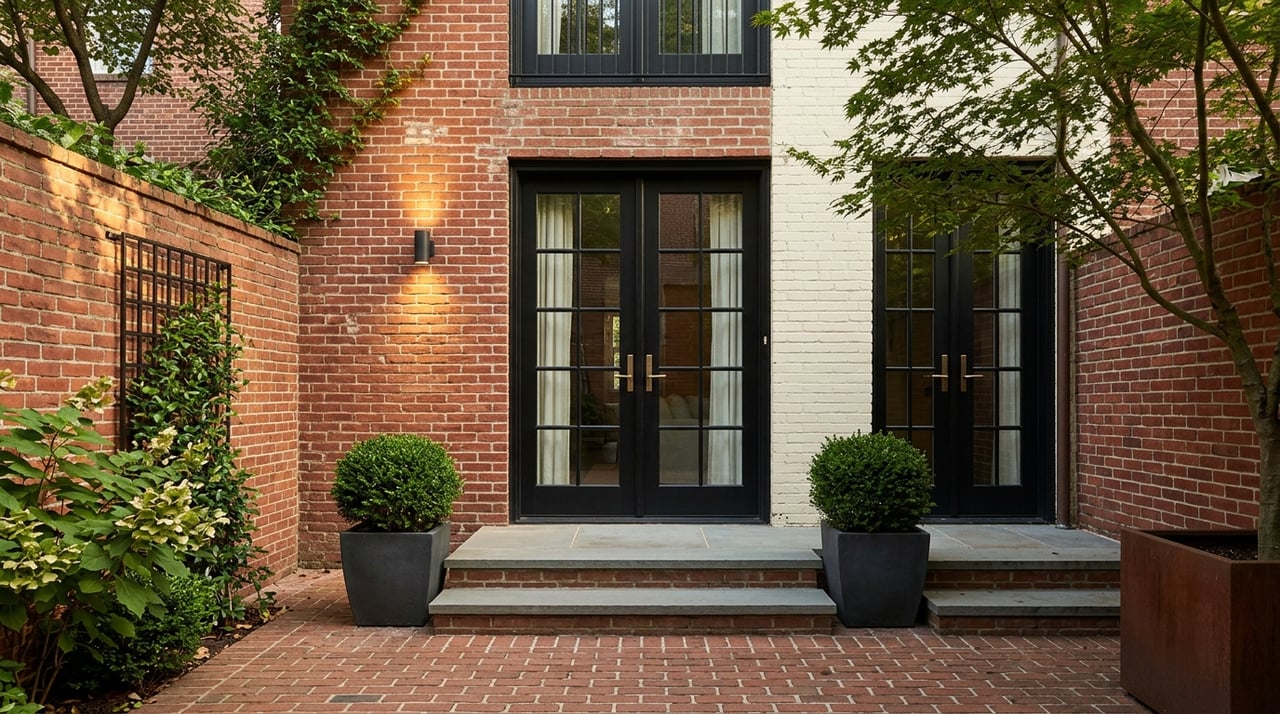
Housing near the waterfront benefits from Georgetown’s established architectural identity. The neighborhood sits within the Georgetown Historic District, which was created in 1950 and was the first historic district in Washington.
That designation helps preserve the area’s character, but it also comes with oversight. Exterior construction is reviewed through the Old Georgetown Board, so updates and changes to a property’s exterior may involve more review than they would in many other DC neighborhoods.
In practical terms, the nearby housing stock includes classic rowhouses, detached houses, and apartment-style residences. If you are buying or selling here, it helps to understand that the charm and long-term visual consistency many people value are tied to preservation rules.
Who Usually Loves This Location
Living near the Georgetown Waterfront often appeals to people who want a walkable, visually striking part of the city with easy access to dining, trails, and public space. If you enjoy stepping outside to run by the river, meet friends for dinner, or walk to shops on M Street, this location checks a lot of boxes.
It can also be a strong fit if you want Georgetown’s historic character but prefer a little more day-to-day energy. The waterfront has a built-in sense of activity that can feel exciting and convenient when that matches your pace.
On the other hand, if your top priority is a quieter, more purely residential setting, the blocks farther inland may feel like a better match. One of the clearest tradeoffs here is simple: you often gain more park access, dining, and events, but you also live closer to Georgetown’s public-facing side.
What Buyers And Sellers Should Keep In Mind
For buyers, the key is matching the location to your routine. Think beyond the view and ask how often you would use the park, trails, dining, and transportation options, because those everyday patterns will shape how much you enjoy living here.
For sellers, the waterfront-adjacent lifestyle is part of the value story. Buyers are often responding not just to the home itself, but to the ability to walk to the river, access trails, dine nearby, and live within one of Georgetown’s most recognizable settings.
Because Georgetown is nuanced block by block, local guidance matters. A home near the waterfront can offer a very different daily experience from one just a few streets away, even within the same broader neighborhood.
If you are considering a move in Georgetown, working with a neighborhood-focused advisor can help you weigh those differences with clarity. To explore Georgetown opportunities with a local, concierge-style approach, connect with Kerry Fortune Real Estate.
FAQs
What is daily life like near the Georgetown Waterfront?
- Daily life near the Georgetown Waterfront tends to feel active and walkable, with close access to the river, Georgetown Waterfront Park, M Street shopping and dining, and a steady mix of public activity and seasonal events.
How close is the Georgetown Waterfront to M Street?
- The blocks closest to the waterfront are less than a five-minute walk south of M Street, which makes it easy to combine riverfront living with quick access to shops and restaurants.
What parks and trails are near the Georgetown Waterfront?
- Residents near the waterfront have access to Georgetown Waterfront Park, the C&O Canal towpath beginning at Mile 0 in Georgetown, and the Capital Crescent Trail at the end of Water Street NW.
Can you commute easily from the Georgetown Waterfront?
- You can commute from the Georgetown Waterfront by walking, bus, biking, rideshare, or car, but Georgetown does not have its own Metrorail station, so it is not typically a subway-first neighborhood.
What types of homes are near the Georgetown Waterfront?
- Homes near the Georgetown Waterfront include classic rowhouses, detached houses, and apartment-style residences, with exterior changes shaped by Georgetown Historic District preservation review.
Is living near the Georgetown Waterfront quiet or busy?
- Living near the Georgetown Waterfront is usually more active than living on quieter inland residential blocks, because the area is close to restaurants, park space, trails, and waterfront events.
