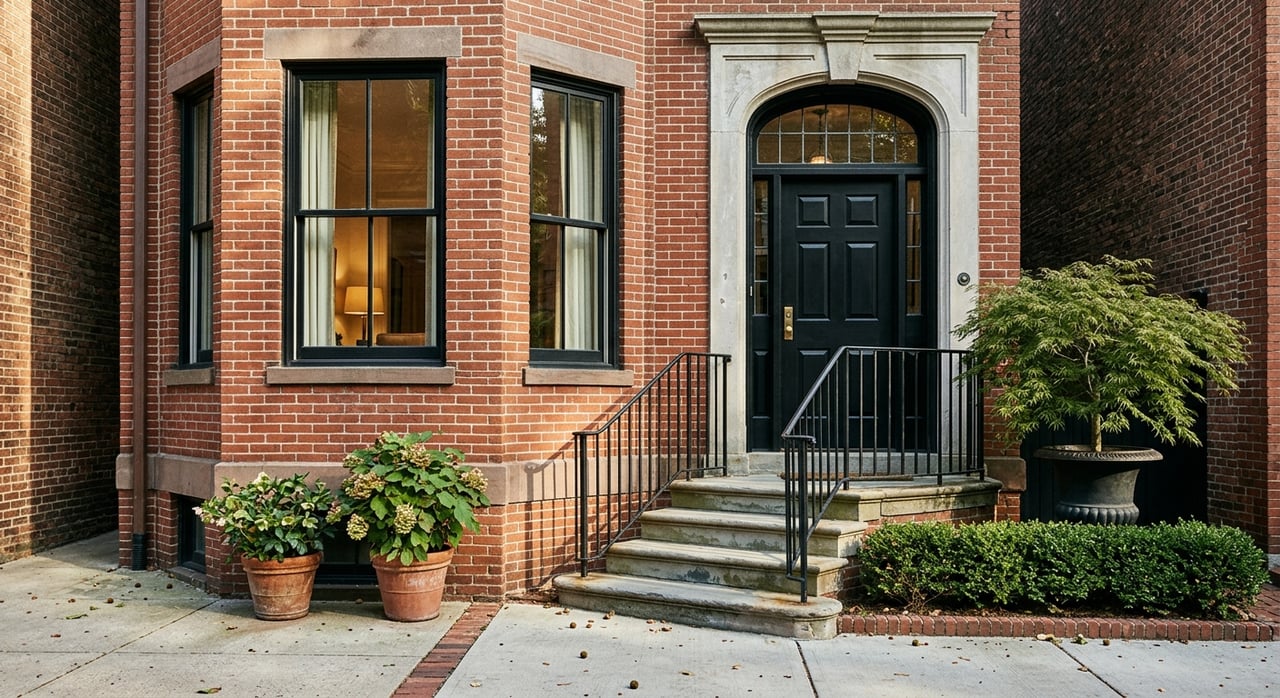
If you are feeling squeezed by your current DC home, Logan Circle may be the kind of move-up that changes more than your square footage. For many buyers, the next step is not just about getting bigger. It is about finding a neighborhood that offers character, convenience, and a home that better fits the way you live now. If you are weighing whether Logan Circle is worth the premium, this guide will help you compare the tradeoffs and see where it fits in today’s market. Let’s dive in.
Why Logan Circle Stands Out
Logan Circle has a distinct feel because it is not a new-build district shaped all at once. According to DC Planning, the Logan Circle Historic District was designated in 1972 and includes an approximately eight-block area known for closely grouped three- and four-story brick and stone homes from roughly 1875 to 1900.
That historic fabric matters if you are moving up from a smaller condo or a newer building. Instead of trading into a generic larger space, you may be able to step into a home with stronger architectural identity, a more established streetscape, and a central address that still feels residential.
What “Move-Up” Can Look Like Here
One of Logan Circle’s biggest strengths is range. Recent sales cited by Redfin show everything from compact flats under 700 square feet to two-bedroom homes around 870 to 1,022 square feet, plus much larger homes around 2,041, 3,070, and even 4,100 square feet.
That spread gives you more than one path forward. Depending on your goals, a move-up here could mean:
- Going from a small one-bedroom condo to a larger two-bedroom home
- Moving from a compact unit into a duplex-style layout
- Trading a newer condo for a townhouse or rowhome with more usable space
- Staying in a central DC location while gaining room for work, guests, or long-term flexibility
For buyers who want to improve both lifestyle and property type without leaving the urban core, that flexibility is a major advantage.
Logan Circle Market Snapshot
The market context is important because move-up decisions usually involve both emotion and timing. Redfin reports a median sale price of $819,724 in Logan Circle over the three months ending May 2026, down 6.0% year over year.
Homes were selling in 61 days with a 98.9% sale-to-list ratio. Compared with the citywide average of 49 days, Logan Circle is moving a bit more slowly, which can point to some price normalization in a neighborhood that still sits firmly in the premium tier.
That does not mean Logan Circle is suddenly a bargain. It does suggest that buyers may have a little more room to evaluate options carefully rather than rush into a decision just to secure the address.
How Logan Circle Compares on Price
If you are considering a move-up, the question is rarely whether Logan Circle is expensive. The better question is whether the value feels justified for what you want most.
Based on the research provided, Logan Circle’s median sale price is about 18% higher than the Washington, DC median of $694,584 as of May 2026. Nearby comparisons place Dupont Circle at $539,818, U Street at $757,245, and Shaw Historic District at $915,000.
That puts Logan Circle in an interesting middle position. It is a premium central neighborhood, but not the highest-priced option in the immediate area.
Price per square foot also helps tell the story. Logan Circle sits at $668 per square foot, which is very close to U Street at $669 and Dupont Circle at $679, while Shaw Historic District is at $642. In practical terms, that suggests total price differences often reflect home size and product mix as much as the neighborhood name itself.
Daily Life in Logan Circle
A move-up purchase should improve your day-to-day routine, not just your floor plan. Logan Circle scores 96 for Walk Score, 90 for Transit Score, and 95 for Bike Score on Redfin, which supports a car-light lifestyle.
For many buyers, that is a major part of the appeal. Washington.org describes the neighborhood as a place where historic character meets newer shops and eateries, with 14th Street NW serving as the main business corridor between M and U streets.
The broader 14th and U corridor profile also points to practical convenience, including grocery access and Saturday farmers market activity. That combination can be especially attractive if you want more living space without giving up the spontaneity and ease that make central DC living feel worthwhile.
Where Logan Circle May Fit Better Than Nearby Areas
When buyers compare Logan Circle with nearby neighborhoods, the differences are often subtle but meaningful. Dupont Circle and U Street each edge Logan out slightly on Walk Score, with 98 and 99 respectively, while Logan Circle still lands in elite territory at 96.
Transit is where Logan becomes even more compelling. Its Transit Score of 90 is stronger than Dupont’s 87 and U Street’s 82, based on the research provided.
If your ideal move-up means keeping excellent access on foot while improving transit convenience, Logan Circle deserves serious attention. That balance can matter just as much as square footage, especially if your weekly routine depends on quick access across the city.
The Historic District Tradeoff
Preservation is one of Logan Circle’s greatest strengths, but it also comes with limits. DC Planning notes that work on historic properties is reviewed for compatibility with historic character, and major changes such as front or side additions, visible roof decks, new front porches, front facade alterations, and demolition of contributing buildings require review by the Historic Preservation Review Board.
For many buyers, that oversight is a benefit. It helps protect the streetscape and reduces the odds of incompatible redevelopment next door.
Still, it is important to be honest about the tradeoff. If you want total freedom to dramatically rework a home’s exterior, Logan Circle may feel more restrictive than other options.
Who Logan Circle Is Right For
Logan Circle is often the right next step if you want to upgrade more than one part of your life at once. It can work especially well if your priorities include:
- A more substantial home in a central DC location
- Historic architecture and a preserved streetscape
- Strong walkability, transit access, and bike convenience
- Easy access to shops, dining, and everyday errands
- A neighborhood that still offers a range of property sizes and formats
For many move-up buyers, that combination is hard to replicate. You are not simply buying more room. You are buying into a setting that can support how you want to live over the next chapter.
When Logan Circle May Not Be the Best Fit
No neighborhood is ideal for every buyer. Based on the research, Logan Circle may be less compelling if your top priority is the lowest price per square foot, a large amount of outdoor space, or full exterior customization flexibility.
Those factors do not make Logan a poor choice. They simply mean the neighborhood tends to reward buyers who value location quality, architectural character, and convenience enough to accept some tradeoffs.
That is often the heart of a smart move-up decision in DC. The right neighborhood is not the one with the fewest compromises. It is the one whose compromises matter least to you.
The Bottom Line on Moving Up in Logan Circle
If your current home no longer fits, Logan Circle offers a compelling next step for buyers who want more space without giving up centrality, character, or daily convenience. The neighborhood’s housing range, strong transit and walkability, and protected historic identity make it especially appealing for buyers who want their next purchase to feel like a true lifestyle upgrade.
At the same time, it is worth going in with clear eyes. Logan Circle is still a premium market, and historic district rules can shape what is possible over time. If those tradeoffs align with your goals, the neighborhood can be one of the most balanced move-up options in Northwest DC.
If you are thinking through where Logan Circle fits in your next move, Kerry Fortune Real Estate offers the neighborhood insight and principal-led guidance to help you evaluate the opportunity with confidence.
FAQs
Is Logan Circle a good neighborhood for moving up from a smaller DC condo?
- Yes. The neighborhood offers a broad range of housing sizes, from smaller flats to much larger condos, duplexes, and townhomes, which can make it a practical next step if you want more space while staying in a central DC location.
How expensive is Logan Circle compared with other DC neighborhoods?
- Logan Circle is priced above the citywide median and sits in a premium central band. In the research provided, it ranks above Dupont Circle and U Street by median sale price, but below Shaw Historic District.
What is daily life like in Logan Circle for DC buyers?
- Logan Circle offers strong day-to-day convenience, with high walk, transit, and bike scores, plus access to restaurants, shops, groceries, and Saturday farmers market activity in the broader corridor.
Are there historic district rules for Logan Circle homes?
- Yes. DC Planning states that major exterior changes to historic properties, including some additions and facade alterations, require compatibility review, which helps preserve neighborhood character but can limit customization.
Is Logan Circle a better fit than Dupont Circle or U Street for a move-up purchase?
- It depends on your priorities. Logan Circle remains highly walkable and has a stronger Transit Score than both Dupont Circle and U Street in the research provided, which may make it especially appealing if transit access is important to your next move.
What kind of buyer is Logan Circle best for?
- Logan Circle is often a strong fit for buyers who want a larger home, historic character, and excellent everyday convenience in a central DC neighborhood, and who are comfortable paying a premium for those advantages.
